Flower & Honey: A Font Pairing Sweet on Style and Versatility
Finding the right typeface can feel like searching for a needle in a haystack. You want something with personality, but it also needs to be readable. It should feel unique, yet versatile enough for multiple projects. For designers, small business owners, and content creators, this balancing act is a daily reality. The Flower & Honey font pairing offers a compelling solution, blending a graceful script with a clean serif to create a visual harmony that feels both joyful and polished.
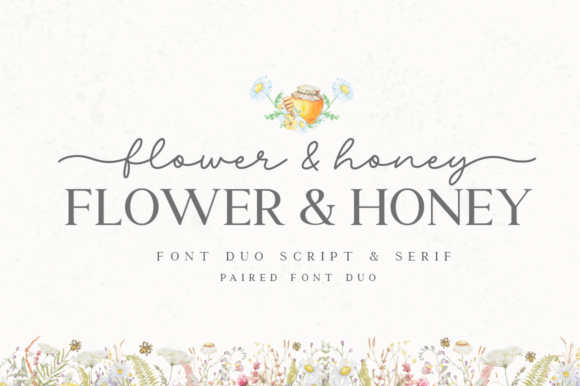
This duo is more than just two fonts sitting side-by-side. They were crafted to complement each other, creating a natural rhythm in your layouts. The script font brings a handwritten, organic charm, while the serif provides stability and clarity. Used together, they establish a clear visual hierarchy that guides the viewer's eye effortlessly. Apart, each stands strongly on its own, ready to serve different aspects of your design needs.
The Visual Appeal: More Than Meets the Eye
What makes Flower & Honey so visually engaging? It starts with the script. This isn't a rigid, formal calligraphy. It has a relaxed, flowing quality with subtle imperfections that give it a human touch. The letterforms connect in a way that feels natural, not forced. The swashes and alternate glyphs—easily accessible thanks to its PUA encoding—allow you to add elegant flourishes where they'll have the most impact, like on an initial capital or a final letter.
The accompanying serif font acts as the perfect counterbalance. It’s a modern take on a classic style, with clean lines and a slightly condensed form that saves space without sacrificing elegance. The contrast between the two is intentional: the script draws attention for headlines and key phrases, while the serif ensures body text or supporting information remains highly legible. This contrast is a fundamental principle of effective font pairing, creating interest without chaos.
Practical Applications Across Your Projects
The true test of a font is how it performs in the real world. Flower & Honey excels across a surprising range of applications, making it a valuable asset in any creative toolkit.
- Branding & Logo Design: The combination is ideal for brands that want to convey approachability, creativity, and a touch of warmth. Think boutique bakeries, floral shops, wedding planners, lifestyle blogs, or artisan product lines. Use the script for the main wordmark and the serif for the tagline to create a balanced logo.
- Packaging & Merchandise: On product labels, boxes, or tote bags, these fonts add instant charm. The script works beautifully for product names, while the serif can list ingredients or features clearly. The playful style is perfect for items targeting a female demographic or those with a handmade aesthetic.
- Digital Presence: For websites and blogs, use the serif for body copy to ensure readability on screens. The script can highlight pull quotes, section headers, or call-to-action buttons. On social media graphics, it creates eye-catching headlines that stop the scroll. The consistent use of this pairing across platforms strengthens brand recognition.
- Print & Editorial: Invitations, greeting cards, and posters come alive with this typography. The script adds a celebratory feel to event invitations, while the serif keeps the essential details legible. In editorial layouts, like magazine features or lookbooks, they help create a stylish, curated mood.
- Marketing & Digital Products: From email headers to lead magnet PDFs, these fonts help maintain a cohesive brand identity. They make sales pages feel more personal and digital products like planners or workbooks feel more polished and valuable.
Aligning Typography with Project Goals
Choosing a font is a strategic decision. Before you dive in, consider the core message of your project. Is it romantic? Professional? Whimsical? The Flower & Honey pairing leans cheerful and stylish, making it a strong fit for projects that aim to feel inviting and creative. For a more corporate or minimalist brand, you might use the serif alone for its clean professionalism.
Always prioritize readability. While the script is beautiful, it's best used for short, impactful text—headlines, logos, or accents. For longer paragraphs, the serif is your workhorse. Test your designs at the actual size they'll be viewed. A script that looks gorgeous in a large headline might become illegible when shrunk down for a website caption.
Take advantage of the included styles. The script likely comes with alternates and swashes that can be accessed through your design software's glyph panel. Experiment with these to avoid repetitive letter shapes and add custom flair. The serif may offer different weights (light, regular, bold), giving you more flexibility for creating emphasis and structure within your layouts.
Making It Work for You
Integrating a new font pairing into your workflow is about practice. Start by using it on a personal project or a mock-up. Create a simple style guide for yourself that notes which font is for headlines, which is for body text, and any specific rules for using alternates. This ensures consistency, especially if you're building a brand identity.
Remember that great typography is invisible when it's done well—it simply communicates the message effectively. The goal of using Flower & Honey isn't just to make things look pretty, but to enhance communication, evoke the right emotion, and build a visual connection with your audience. When a font pairing feels this natural, it becomes a powerful tool for telling your story, one beautifully crafted word at a time.