Desevon: Where Timeless Elegance Meets Modern Design
There's a moment in every design project when the typography clicks into place, and suddenly everything feels intentional, polished, and complete. For creators who crave that feeling of refined sophistication, Desevon delivers exactly that—a serif typeface that bridges the gap between classical beauty and contemporary clarity. Whether you're building a brand from scratch or refreshing an existing visual identity, this font offers a rare combination of grace and versatility that's hard to find in today's crowded marketplace of typefaces.
Understanding the Visual Character of Desevon
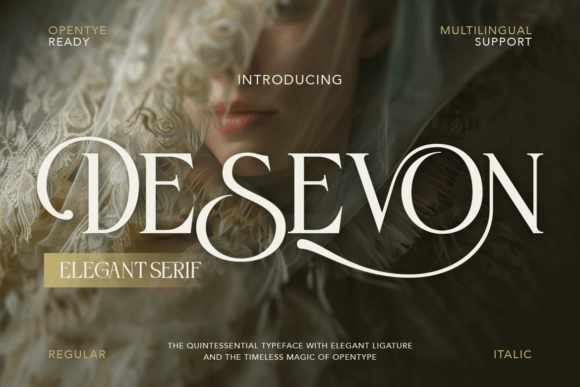
What sets Desevon apart from countless other serif fonts is its careful balance of high-contrast strokes and graceful curves. The letterforms feel luxurious without being pretentious, elegant without sacrificing legibility. Each character has been crafted with attention to proportion and rhythm, creating a natural flow that makes body text comfortable to read while headline settings feel commanding and refined.
The font includes both uppercase and lowercase letter sets, numerals, punctuation, and a thoughtful collection of alternates and ligatures. These extras aren't just decorative afterthoughts—they're practical tools that let you fine-tune the personality of your typography. A stylistic alternate might swap out a standard "g" for something with a more dramatic tail, or a ligature could seamlessly connect certain letter combinations for a smoother visual rhythm. For anyone working on projects where every detail matters, these features transform Desevon from a simple typeface into a genuine creative asset.
The availability of both regular and italic styles in OTF and TTF formats means you're covered across different software environments and design workflows. Whether you're working in Adobe Illustrator, Canva, Figma, or even Microsoft Word, you'll have the flexibility to use Desevon wherever your projects take you.
Where Desevon Truly Shines: Practical Applications
Let's talk about real-world use cases, because a beautiful font only matters if it works in context.
Branding and Logo Design: If you're developing a brand identity for a luxury service, boutique product line, or premium personal brand, Desevon brings an immediate sense of authority and taste. Think about the logos for high-end fashion houses or artisanal skincare brands—they often rely on refined serif typography to communicate exclusivity. Desevon fits perfectly into that space. Its alternates give you room to customize the look so your logo doesn't feel generic, even when using a commercially available font.
Editorial and Magazine Layouts: There's a reason why serif fonts dominate the pages of Vogue, Architectural Digest, and other premium publications. They carry a sense of tradition and editorial authority. Desevon works beautifully for feature headlines, pull quotes, and subheadings in magazine-style layouts. Pair it with a clean sans serif for body text, and you've got a typographic system that feels both sophisticated and readable.
Wedding Invitations and Event Stationery: The delicate swashes and flowing ligatures in Desevon make it a natural choice for wedding designs. Invitations, save-the-dates, menus, and program cards all benefit from that handcrafted-yet-polished aesthetic. The italic style adds an extra layer of romance and movement that works especially well for script-adjacent applications where you want elegance without sacrificing clarity.
Packaging Design: For beauty brands, gourmet food products, or specialty beverages, packaging is often the first touchpoint with a customer. Desevon's luxurious character helps communicate quality before someone even reads the product description. Use it for product names, taglines, or brand marks on labels and boxes—it holds up beautifully at both large display sizes and smaller supporting text.
Digital Content and Social Media: On platforms like Instagram and Pinterest, where visual competition is fierce, typography can make or break your content's performance. Desevon works well for quote graphics, carousel headers, and branded templates. Its distinctive letterforms help your content stand out in a feed while maintaining a cohesive, professional look that strengthens brand recognition over time.
Making Typography Work for Your Brand
Choosing a font is rarely just about aesthetics—it's about communication. The typeface you select sends a message before anyone reads a single word. A playful handwritten font says something completely different than a structured geometric sans serif. Desevon communicates refinement, trust, and attention to detail, which makes it ideal for brands and projects where credibility and sophistication matter.
One practical consideration worth mentioning: font pairing. Desevon's ornate character means it performs best when balanced with something simpler. A clean sans serif like Montserrat, Lato, or even a minimalist grotesque can provide the contrast needed to keep your layouts feeling modern rather than overly decorative. Use Desevon for headlines and key messaging, then let a straightforward secondary font handle longer paragraphs and supporting information. This approach maintains visual hierarchy while keeping your designs accessible and easy to navigate.
Readability is another factor that deserves honest attention. While Desevon's high-contrast strokes and decorative features make it stunning at larger sizes, you'll want to be thoughtful about using it for extended body copy, especially on screens. Test your layouts at actual viewing sizes and distances. A font that looks gorgeous in a 72-point headline might struggle at 11 points in a blog post. This isn't a flaw—it's simply how display-oriented serif fonts work. Knowing when and where to deploy each style is what separates good design from great design.
A Few Things to Keep in Mind
Before committing to any font for a commercial project, always review the licensing terms. Make sure the font's usage rights align with how you plan to use it—whether that's client work, merchandise, digital products, or print materials. Understanding these details upfront saves headaches later and respects the work of the type designers who created the font.
Also, take advantage of the included characters map file. It's a practical resource that shows you every glyph, alternate, and ligature available in the typeface. Instead of guessing what's included, you can browse the full character set and plan your typographic choices with intention. This is especially helpful when designing logos or custom wordmarks where specific letter combinations and alternates can make a meaningful difference in the final result.
For anyone building a brand identity system, consider creating a simple typography guide that specifies which Desevon styles to use in different contexts. Define your headline style, your accent style, and how the font interacts with your secondary typeface. This kind of documentation keeps your visual communication consistent across business cards, websites, social media, packaging, and everything in between. Consistency builds recognition, and recognition builds trust.
Why Thoughtful Typography Matters More Than Ever
In a landscape saturated with quick templates and auto-generated designs, the details that separate amateur work from professional presentation have become even more noticeable. Typography is one of those details. It doesn't need to be complicated or expensive—it just needs to be intentional. A font like Desevon gives you the tools to create that intentionality without requiring a design degree or years of typographic study.
Whether you're a small business owner crafting your first brand identity, a designer working on a luxury client project, or a content creator building a cohesive visual presence online, investing in a quality typeface is one of the most impactful decisions you can make. It affects how your audience perceives your work, how memorable your brand becomes, and how confidently you present your ideas to the world.
Desevon won't be the right fit for every project—and that's perfectly fine. No single font should be. But for those moments when you need your typography to communicate elegance, precision, and a sense of curated taste, it's a typeface worth having in your toolkit.