Unearthing the Dark Allure of the Impressions Typeface
You know that feeling when you stumble upon a design asset that just clicks? It’s not just another file; it’s a vibe. For anyone who has ever wrestled with a Halloween poster, a horror-themed book cover, or a brand that needs a touch of the macabre, finding the right typeface can feel like discovering a hidden treasure. Enter Impressions, a display font that doesn’t just sit on the page—it seeps into it, creating an atmosphere that is both unsettling and utterly captivating. It’s the kind of font that makes you want to lean in closer, even as a part of you wants to look away. For the designer, the small business owner, or the creative hobbyist, this is more than just a set of letters; it’s a storytelling tool.
A Visual Language of Shadows and Edges
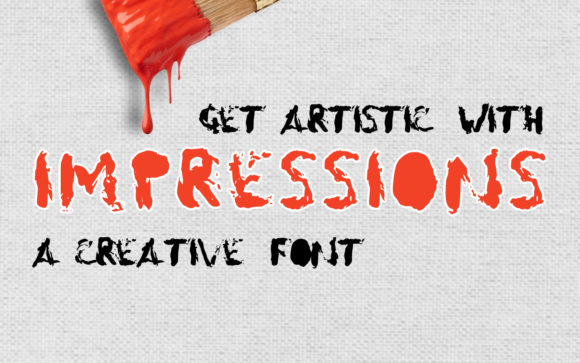
What makes Impressions so visually arresting? It’s all in the details. This isn’t a clean, friendly sans-serif. It’s a creepy and dark looking display font that feels hand-hewn and slightly decayed. The letterforms have a raw, textured quality, as if carved from old wood or etched into a foggy windowpane. The serifs are pronounced but uneven, giving each character a sense of precarious balance. There’s a subtle irregularity in the strokes—a slight wobble here, a tapered end there—that avoids looking digitally perfect, which is precisely what gives it its haunting charm. It’s a typeface with personality, one that whispers of old graveyards, abandoned manors, and stories best told by candlelight. This inherent character is a massive advantage for projects where mood is paramount.
Beyond the Haunted House: Practical Applications
While its Halloween-related project suitability is obvious, limiting Impressions to October would be a mistake. Its strength lies in its ability to inject a sense of narrative depth and emotional weight into a wide array of creative and commercial ventures. Think about the last time a piece of design truly stopped you in your tracks. Often, it’s because the typography worked in perfect harmony with the imagery and message. Impressions is built for that kind of synergy.
- Branding & Logo Design: For escape rooms, specialty coffee roasters with dark blends, boutique horror publishers, or even a musician with a folk-gothic aesthetic, this font becomes the cornerstone of a brand identity. It’s not just a logo; it’s an immediate signal of the experience you offer.
- Packaging & Merchandise: Imagine this on a label for a craft beer called "Graveyard Shift" or on packaging for artisanal chocolates with a dark twist. On merchandise like t-shirts, posters, or enamel pins, it transforms a simple product into a wearable or displayable piece of art.
- Digital & Print Media: The applications are vast. Use it for striking social media graphics that cut through the noise, for header images on a blog exploring true crime or folklore, or as the title font for a poster promoting a local theater production of a classic thriller. It works powerfully in editorial layouts for magazine features on haunted locations or as chapter titles in a self-published ebook.
Strategic Typography: Making It Work for You
Adopting a premium font like Impressions is an investment, and like any good design asset, its effectiveness hinges on strategic use. You wouldn’t use a chisel-tip brush for every task, and the same applies to a display font. Its strength is in headlines, logos, and short, impactful phrases. For body copy, you’ll need a partner. This is where understanding font pairing becomes crucial.
The goal is contrast and readability. Pair Impressions with a clean, neutral sans serif font for paragraphs or supporting text. A simple, geometric sans-serif can provide a modern counterbalance, letting the display font do the atmospheric heavy lifting without causing visual fatigue. Avoid pairing it with another highly stylized script font or an overly ornate serif font, as they will compete for attention and create chaos. Always test your pairings at the actual size they’ll be viewed. A combination that looks grand on your large monitor might become an unreadable blur on a mobile phone screen.
Considering the Practicalities: Licensing and Styles
When you acquire a commercial font, you’re not just buying letters; you’re purchasing the rights to use them in your projects. Always review the licensing agreement carefully. Does it cover the uses you have in mind, such as on merchandise for sale or in client work? Most reputable font licenses are clear, but it’s your responsibility to ensure compliance. Furthermore, explore what’s included in the font family. Does it come with multiple weights (light, regular, bold)? Are there alternate characters or stylistic sets? Knowing the full toolkit allows you to explore the font’s potential more deeply and maintain visual consistency across a complex project.
Ultimately, the best way to know if a typeface is right is to get your hands dirty. Import it into your design software, play with sizes, colors, and backgrounds. Set your actual headlines. Does it convey the precise feeling you’re after? Does it help improve the professional presentation of your mock-up? Does it feel engaging? A font like Impressions isn’t a passive element; it’s an active participant in your design’s story. It’s a creative font that demands thoughtful application but rewards it with a powerful, cohesive, and deeply resonant visual language. For the crafty idea that needs a dark edge, or the brand that thrives in the shadows, it might just be the missing piece that turns a good project into an unforgettable one.